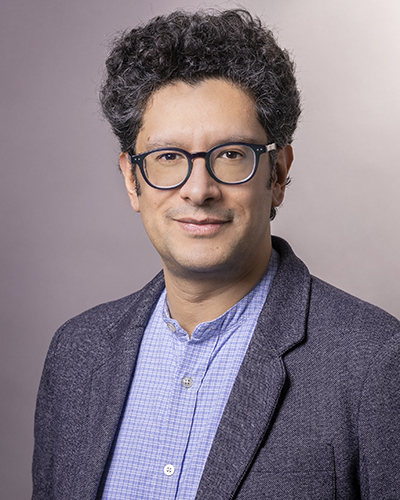
Als Lateinamerikanist (M.A., FU Berlin 2005) und promovierter Romanist (Dr. phil., Uni Potsdam 2011) widme ich mich in Lehre und Forschung schwerpunktmäßig den spanisch- und französischsprachigen Literaturen und Kulturen der Frühen Neuzeit und des 20. Jahrhunderts. Diese historische Klammer ist für mich unvermeidlich, um die Konstitution, Transformation und auch Vielschichtigkeit der Kolonialität der Neuzeit und Moderne zu erfassen. Meine Promotion hat sich der lateinamerikanischen Romanproduktion seit dem Boom der 60er Jahren gewidmet. Die zentrale These dieser Arbeit lautet, dass aus lateinamerikanistischer Perspektive der Weltbegriff als Grundproblem des Romans zu bedenken ist. Dabei geht es nicht nur um die Herausforderung, eine Welt zu schaffen, sondern immer auch um die in der kolonialen Moderne unvermeidbare Einsicht, dass es mehrere Welten gibt und diese in einem hierarischen und spannungsvollen Verhältnis zueinanderstehen. In meiner Habilitation analysiere ich Petrarcas Secretum als einen Gründungstext westlicher Kulturhegemonie. Konkret untersuche ich hier die Genese und Spezifik einer proto-kolonialen Subjektivität, ihre Begehrensstruktur und ihre Strategien der Zentrierung von Geschichte. In meiner Arbeit ist eine machtkritische und intersektionale Perspektive auf literarische, philosophische und theoretische Texte leitend. Mich interessiert dabei vor allem die Art und Weise, wie in der kolonialen Moderne Bedeutungen generiert werden und wie sie zirkulieren, autorisiert und verfügbar gemacht, aber auch hinterfragt, vervielfacht und transformiert werden. Bedeutungen verstehe ich nicht nur als streng hermeneutische Arbeit, sondern als eine Praxis, in denen kulturelle, materielle und historische Aspekte interagieren. Aktuell widme ich mich der komplexen und theoriegeschichtlich weit verzweigten Zentralität des Lebensbegriffs in kulturtheoretischen Debatten Lateinamerikas (Dussel, Ferreira da Silva, Rolnik, etc.). Dekoloniale Denk- und Kommunikationsräume sind für mich innerhalb und auch außerhalb der Universität unabdingbar, um eine Gemeinschaft des Lebens zu denken und erproben, deren Konstitution nicht auf die Vernichtung oder Unterwerfung des Anderen gründet.
As a Latin Americanist (M.A., Free University of Berlin, 2005) and a Romance studies scholar with a doctorate (Dr. phil., University of Potsdam, 2011), my teaching and research focus primarily on Spanish- and French-language literatures and cultures of the Early Modern period and the twentieth century. For me, this historical bracket is indispensable in order to grasp the constitution, transformation, and also the complexity of coloniality in the early modern period and modernity. My doctoral dissertation was devoted to Latin American novel production since the Boom of the 1960s. The central thesis of this work is that, from a Latin Americanist perspective, the concept of the world must be considered as a fundamental problem of the novel. This involves not only the challenge of creating a world, but always also the insight—unavoidable in colonial modernity—that there are multiple worlds and that these stand in a hierarchical and tension-filled relationship to one another. In my habilitation project, I analyze Petrarch’s Secretum as a foundational text of Western cultural hegemony. More specifically, I examine the genesis and specificity of a proto-colonial subjectivity, its structure of desire, and its strategies for centering history. In my work, a power-critical and intersectional perspective on literary, philosophical, and theoretical texts is guiding. I am particularly interested in the ways in which meanings are generated in colonial modernity and how they circulate—how they are authorized and made available, but also questioned, multiplied, and transformed. I understand meanings not only as a strictly hermeneutic endeavor, but as a practice in which cultural, material, and historical aspects interact. Currently, I am dedicating my research to the complex and theoretically far-reaching centrality of the concept of life in cultural-theoretical debates in Latin America (Dussel, Ferreira da Silva, Rolnik, etc.). Decolonial spaces of thought and communication are, for me, indispensable both within and beyond the university in order to conceive of and experiment with a community of life whose constitution is not founded on the destruction or subjugation of the Other.